Oct 19, 2024
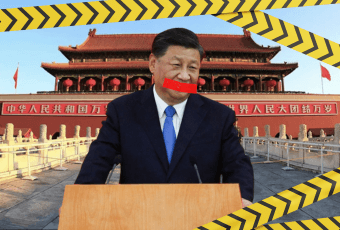
Debate: Current laws arguably restrict the freedom of speech in China, leading to a politics of fear and a culture of self-censorship. To what extent are people free to truth-tell in China?
1.0 Introduction
In 2016, when Xi Jinping announced that ‘the Party’s media must bear the Party’s surname’,1 it signalled to the world that China was moving in a decidedly anti-liberal direction. Indeed, his administration would see a number of censorship policies that definitively restricted free speech in both the media and online spaces. One reading of such an administration would point to the state’s effective control over legal, regulatory and technological mechanisms that allow for state control on free speech. This paper, however, argues that even within such an illiberal environment, citizens and the media are in constant negotiation with the state, particularly in regards to information exchange within the public sphere. Although, as analysis will show, the power imbalance ultimately favours the state, such discourse focusing on their monopoly over information and political discourse neglects discussion on how these spaces are negotiated and maintained in the authoritarian context. This paper contends that truth-telling remains a particularly central bargaining tool for contesting and limiting censorship practices. Even in a highly sophisticated and resilient authoritarian state such as China, truth intrinsically plays a paradoxical role in both social resistance and state control.
2.1 Criminalising Dissent
Perhaps most crucial to understanding the right of expression in China is through its legal understanding. Constitutionally, China recognises its citizens’ right to free speech and expression, citing Article 35 as evidence for this.2 In practice, however, this right is conditional to Article 51 which limits their right to speech that does not ‘infringe upon the interests of the State, of society or of the collective’.3 In fact, China criminalises such speech in its Criminal Law. Articles 13 and 105, for example, 4 stipulate the crime of ‘subversion’, a particularly vague term that is effectively used to imprison and outlaw dissidents. Within the very language of its criminal law, free speech is politically neutralised, so that state authority and subsequently, state control remains unchallenged. The law, in this sense, serves not only to deter political opposition, but arguably serves to promote fear and a culture of self- censorship.5
This reading, however, assumes that the one-party state holds supreme hold and control over its subjects. Yet, in practice, while it is certainly resilient, the regime itself is arguably in constant negotiation with its people, using its force in strategic ways to reinforce legitimacy and suppress viable mobilisations that could call the state’s authority into question.
2.2 Dynamic Censorship in the Media and the Cyberspace
Central to the state’s reinforcing of their legitimacy is their censorship practices and control over the media apparatus. The media apparatus is essentially absorbed into the state regime. Due to historical development from the reform era, it has decoupled from being state-owned enterprises to being commercialised entities with limited independence from the state.6 Censorship in the case of commercial and independent media outlets are carried out in the form of state regulatory bodies, which delegate ‘guidance’ on their coverage of issues and stories.7 For example, Repnikova identifies how state and local officials can authorise pre- and post-censorship bans at any time, including a total ban on contentious issues that could threaten the regime’s image. Journalists operating within these confines often work in collaboration with the state. Media reporting is also subjected to a number of directives which include pre-publication and post-publication censorship orders by local officials and the Central Propaganda Department.8 This undoubtedly leaves direct criticism unfeasible as a means for exerting pressure for reform. In many cases, journalists work collaboratively within the state-approved boundaries, abstaining from definitively taboo topics that contradict and challenge the party-state. These include reporting on pro- democracy movements, Tibet, Taiwan, Xinjiang, or any censored topics which vary depending on the political climate and official orders.9
Indeed, such practices are incorporated in the state’s surveillance of the cyberspace. Particularly in the era of Xi, a number of censorship policies have been implemented, increasing state technological capability to surveil and incriminate user activities on the internet.10 Most infamous of their methods to censor the internet is what is dubbed as the ‘Great Firewall’, which is a catchall phrase for the technological techniques that censor and control information on the Chinese internet. The employment of machine learning and automation processes have increased the ability for authorities to censor, detect and remove content that is blacklisted by the state.11 As noted by Quan, censorship in the digital space is dynamic, and indeed changes according to the needs of the state in controlling particular narratives during particular events.12 In this sense, the internet is fairly liberal compared to the stricter content censorship imposed on its media.13 Nevertheless, while automation processes are in order, it has also been reported that they also have extensive personnel which operate to survey and censor information across all levels of government.14 In an effort to deter dissident activity, the government released a new censorship policy in 2021 that required social media operators to register users under their real name.15 Like the media apparatus, China’s telecommunications services are regulated by a state-authorised body, the Cyberspace Administration of China, which can collaborate with the state to release and invade user privacy.
Media, as well as online activity, under China’s Media Law, are susceptible to being punished under Criminal Law. As reflected in Article 26, the Media Law states that content that ‘jeopardises the unity...of the state’ could invoke criminal liability, including imprisonment.16 Despite this, netizens and journalists continue to push these boundaries as we shall explore in the following sections.
3.0 The ‘Grey Zone’ of Journalism and the Negotiation for Truth-Telling
In 2022, it is reported that at least 43 journalists in China have been imprisoned for crimes of ‘subversion’ from their work.17 As noted by Repnikova, often journalists do not cross the ‘red line’ when it comes to their journalism, due to risks of imprisonment.18 However, they do exercise a certain level of autonomy, particularly in investigative and commercial lines of work. Indeed, while the authorities may impose pre-censorship bans that impact or outright forbid their work from being published, the work of journalists is not monolithic and they contest these lines of censorship especially within what is known as the ‘grey zone’. In the case of ‘grey zone’ issues, journalists can have a consultative power, despite imposed restrictions. This ‘grey zone’ includes coverage of potentially sensitive topics, including official corruption, environmental disasters, crisis events and societal issues.19 Repnikova notes that in pursuing issues that could potentially be censored by local authorities, such as corruption or systemic failures, journalists often engage in a ‘cat and mouse’ race to overcome censorship in pursuit of public interest.20 Due to the hierarchical and decentralised structure of government, reporting on local authorities and issues does not necessarily damage the CCP reputation or ideology. Often, bans imposed on ‘grey’ issues are dependent on local authorities whose influence is limited to their network.21 As one journalist puts it, the media, as they see it, ‘should supervise authorities, but also collaborate with them in achieving societal progress’.22 Inherent in such views is the transformative power which the media under Party supervision can have on issues that affect people within the regime. As the Party legitimises itself on collective unity, journalists working from within, channel their exercise of expression in reporting on these sensitive local issues. Often journalists can exploit their networks, the timing of their report, and engage in cross-regional collaboration to get a story out, despite the best efforts of local authorities to contain and censor. 23 In the case of the story of the 2008 Wenchuan Earthquake, journalists were quick to use public momentum stirred up from strategic online leaks and overcome a ban on its reportage.24 By using public opinion, officials eventually lifted the ban on its reporting, so that such bans do not reflect poorly on the Party. Even in instances when a censorship is issued, journalists found ways to work their stories and truth-tell, while also balancing quite carefully how it is perceived by both the state and the people.
In pursuit of truth-telling, media actors are indeed constrained by top-down orders that ultimately serve the Party’s interests. However, the decentralisation of censorship of the ‘grey zone’ provides a more fluid picture of the media landscape than presumed. Within this space, journalists are able to not only negotiate with authorities and publicise sensitive issues, but also use public opinion and sentiment to advocate for truth-telling and in-depth news coverage.
4.0 COVID-19 and the Emergence of the Citizen Journalist
As perhaps alluded to in the last section, another avenue through which the journalist can challenge or negotiate reporting on an issue is their use of social media or the internet to break a story. Within the limited jurisdiction of the media however, in the event of catastrophic events, the media itself may not effectively carry out such a task. For this, we will look to the emergence of the citizen journalist in China during COVID-19, and how regime- challenging narratives through self-appointed citizen journalism emerged and fuelled protests across the nation.
4.1 The Blank Paper Protest: A Case Study
In the outbreak of the novel coronavirus epidemic, the state ordered strict lockdown rules to contain the virus, maintaining orders to obey the ‘zero COVID’ policy. However, after two years of lockdown and systematic frustration over government failure to contain the pandemic, the 2022 Blank Paper Protests (BPP) emerged in multiple cities, including Wuhan, the epicentre of the pandemic, and Shanghai.25 In the lead up to these protests was a growing dissatisfaction at not only officials and the stringent policies keeping citizens inside, but also the lack of adequate, consistent and transparent information that was being delivered through main channels of Chinese media. On social media, citizen journalists shared reports on rumours, accidents, issues and information from foreign sources, such as the banned social media platform, Twitter.26 Challenging much of the official news sources, citizens began expressing their discontent at the authorities in the form of protest, holding a blank A4 piece of paper, with some even breaking their silence, calling for Xi to step down.27 In a study by Chang, he notes that during the pandemic, geolocating users from China increased up to 40%, emphasising how circumvention and awareness of censorship may have escalated the development of social unrest in China.28 The development of this movement represents how under extreme conditions, censorship can be quickly positioned as contentious, even in places where it is widely tolerated.
4.2 Resilient Authoritarian: Improvised Censorship and Punishment
What is perhaps noteworthy about the regime is how successful it has been in normalising such limits and meting out punishment for dissenters. In the aftermath of the BPP, protesters and coverage of the protests have been effectively silenced and censored, including policies that aggressively censored free speech on the internet,29 as well as imprisonment of citizen journalists.30 While stringent censorship is in place, such measures appear to be tolerated writ large.
Censorship and punishment arguably in China, is quite fluid, and its ad hoc and almost ambiguous style of implementation allows it to improvise accordingly. Its activation is calculated on both the ‘threat of collective action’ and ‘social tensions’.31 It is precisely because it can adapt according to public sentiment, issues and events that it has been able to hold control over the exercise of free speech. Chen and Xu explain how in resilient authoritarian states, moderate censorship is preferred because usually it does not infringe on the majority’s experience of daily life.32 Reflecting this, the Chinese censorship strategically mutates and often attacks and discourages collective action quickly and quietly, removing any traces of such.33 It does this through strategic incrimination of key dissidents to stem further collective action. Extra-legal forms of intimidation and incarceration by authorities are not uncommon measures of social control.34 In a testimony by one protester in the movement, they explain how information about the protest left many participants in fear of possible charges. They say, ‘there is no way of knowing whether anyone else has been arrested. China is like a black hole of information’.35 As explained by Pils, the use of the Criminal Law by the state has always been strategic and intentionally ambiguous, using ‘latent violence’ as a form of social control.36 She uses the case of how the arrest of just Liu Xiaobo out of 350 dissidents effectively silenced an entire pro-reform movement.37 This elusive style of suppression is also mirrored in their censorship programme, which as explained by Han and Shao, ‘shrinks or expands the zone of permissible expression’.38 Censorship in both the media and internet spaces are selective and, in many ways, strategically adjusted, scaling up and down depending on political climate.39 Truth-telling is negotiated in so far as it reflects a consistent enough positive image of the Party, and often the result of such negotiation does not infringe on its citizens’ demand for greater transparency or the need for lifting censorship entirely. As demonstrated by the ‘grey zone’, the state allows for limited negotiation, which in turn – counter-intuitively – consolidates the regime. Roberts explains further:
‘When censorship is obvious, is linked to content that users demand, or is instituted during time periods of crisis, it can facilitate backlash...However, because authoritarian regimes have incentive to disguise censorship and because demand for political information is generally low...subtle, incomplete control over the information environment can work to the autocrat’s advantage.’40
4.3 Contesting the Truth
An example which attests to perhaps the propaganda-censorship apparatus’s success is the rising phenomenon of a Chinese nationalism that supports the regime. The emergence, for example, of the ‘voluntary fifty-cent army’ interestingly highlights this fact.41 Often these netizens are aware of censorship, but insist on supporting the regime’s practices, labelling anti-regime or regime-challengers as threats to the Chinese state.42 Such supporters have also spread across the Chinese diaspora.43 This rhetoric of outside threats and marginalising of dissenters as ‘subversive’ is a particularly prominent feature in Chinese state propaganda, reflected in Xi’s speeches, jurisprudence, state media and even education. Cantoni et al. showed how even in a simple reform of political education, from a change to pro-regime textbooks in China between 2004 and 2010, had positively influenced student’s overall beliefs on China’s governance.44 In addition to this, such plurality and division in political views is further evidenced by Wang and Tao, who revealed even after the COVID-19 pandemic, Chinese nationalism increased among netizens.45 Despite the protests and perhaps awareness of BPP, netizens in China are not monolithic and decidedly anti-regime, as the development of the protests may suggest. Even nationalistic identification is particularly diverse. In an analysis on netizen Chinese nationalism, Wang and Tao demonstrated that the spectrum ranged from ambivalence to feelings of ‘national superiority’.46 While it can be speculated that censorship and techniques applied by the state such as ‘astro-turfing’ or the employing of the ‘fifty-cent army’ (state-employed personnel who are paid to defend the regime on online spaces) may have influenced the dataset,47 arguably the publicness of these comments have substantial influence on deterring collective action. In a study on the policy changes of the CCP to allow for Hong Kong protesters to publicly communicate online, it demonstrated how ‘horizontal’ disagreements between citizens and allowing citizens to disagree publicly can further legitimise the regime, deterring collective action without warranting intervention.48
These evidences taken together demonstrate that within such ‘grey’ areas, where a certain level of autonomy and liberality exists, it reinforces rather than dismantles the authoritarian state. While BPP demonstrates perhaps a limit to state control in light of regime-challenging narratives, it also illuminates how truth-telling itself is in constant negotiation within China. Certainly, where the state can manipulate and distort its liberalising capacity to its advantage, the negotiation of truth between citizens, and citizen vis-à-vis the state, can marginalise or elevate particular voices in the public sphere, consolidating or challenging authoritarian legitimacy.
5.0 Conclusion
While the COVID-19 pandemic presents an extraordinary case of where the regime’s control of censorship was ineffective, such a case counterintuitively underscores the regime’s historical effectiveness in censoring the people’s right to free speech. This paper demonstrates that authoritarian states require truth-telling, and its resilience depends on these undefined ‘grey’ spaces that sufficiently allow for its expression and exchange. In fact, the resilience of the state depends on how it finely regulates censorship and responds to such demands, accordingly.
FOOTNOTE
1 Eva Pils, Human Rights in China: A Social Practice in the Shadows of Authoritarianism (Cambridge, UK: Polity Press, 2018), 92.
2 Constitution of the People’s Republic of China, art. 35, http://www.npc.gov.cn/zgrdw/englishnpc/Constitution/2007-11/15/content_1372964.htm.
3 Constitution of the People’s Republic of China, art. 51, http://www.npc.gov.cn/zgrdw/englishnpc/Constitution/2007-11/15/content_1372964.htm.
4 Criminal Law of the People’s Republic of China, art. 13, trans. CECC, https://www.cecc.gov/resources/legal- provisions/criminal-law-of-the-peoples-republic-of-china; ibid., art. 105.
5 Pils, Human, 87.
6 Maria Repnikova, Media Politics: Improvising Power Under Authoritarianism (Cambridge, UK: Cambridge University Press, 2017), 46.
7 Anne-Marie Brady, Marketing Dictatorship: Propaganda and Thought Work in Contemporary China (Plymouth, UK: Rowman & Littlefield Publishers Inc., 2008), 104.
8 Repnikova, Media, 83-84.
9 Ibid., 80.
10 Arthur S Hayes and Robin Anderson, “Repression and Restrictions on Internet Freedom of Expression: The Great Firewall of China, and the Loss of Democracy in India”, in Censorship, Digital Media, and the Global Crackdown on Freedom of Expression, eds. Robin Anderson, Nolan Higdon and Steve Macek (New York, USA: Peter Lang Publishing Inc., 2024), 343;
11 Emily Quan, “Censorship Sensing: The Capabilities and Implications of China’s Great Firewall Under Xi Jinping”, Sigma: Journal of Political and International Studies 39, no. 4 (2022): 22, https://scholarsarchive.byu.edu/sigma/vol39/iss1/4;
12 Ibid., 24-25.
13 Gary King, Jennifer Pan, and Margaret E Roberts, “How Censorship in China Allows Government Criticism but Silences Collective Expression”, American Political Science Review 107, no. 2 (May 2013): 339, doi:10.1017/S0003055413000014.
14 Ibid., 326; “China employs two million microblog monitors state media say”, BBC News, October 4, 2013, https://www.bbc.com/news/world-asia-china-24396957.
15 Freedom House, “Freedom on the Net 2023: China”, Key Developments, June 1, 2022 – May 31, 2023, accessed June 3, 2024, https://freedomhouse.org/country/china/freedom-net/2023#footnote6_xzoqqfj.
16 Committee to Protect Journalists, Falling Short: Olympic Promises Go Unfulfilled as China Falters on Press Freedom (New York, USA: Committee to Protect Journalists, 2008), 54, https://www.refworld.org/reference/countryrep/cpj/2008/en/58925.
17 Ibid.
18 Repnikova, Media, 82.
19 Ibid.
20 Ibid., 81.
21 Ibid., 87.
22 Ibid., 67.
23 Ibid., 91-92.
24 Ibid., 121.
25 Jessie Yeung, “China’s lockdown protests: What you need to know”, CNN World, November 29, 2022, 6:02 a.m. EST, https://edition.cnn.com/2022/11/28/china/china-lockdown-protests-covid-explainer-intl- hnk/index.html.
26 Ibid.
27 Ibid.
28 Chang et al., “COVID-19 increased censorship circumvention and access to sensitive topics in China”, PNAS 119, no. 4 (2022): 3, https://doi.org/10.1073/pnas.2102818119.
29 Freedom House, “Freedom”.
30 Joel Keep and David Helsop, “Detention of citizen journalists who reported on the outbreak of COVID-19 in Wuhan”, Global Biosecurity 5, no. 1 (2023): 1, doi:10.31646/gbio.215.
31 Rongbin Han and Li Shao, “Scaling Authoritarian Information Control: How China Adjusts the Level of Online Censorship”, Political Research Quarterly 75, no. 4 (2022): 1354, doi:10.1177/10659129211064536.
32Jidong Chen and Yiqing Xu, “Information Manipulation and Reform in Authoritarian Regimes”, Political Science Research and Methods 5, no. 1 (2017): 165, doi:10.1017/psrm.2015.21.
33 Pils, Human, 86-87.
34 Ibid., 60.
35 Amnesty International, “China’s White Paper Movement: One year on, six protesters share their stories”, Campaigns, November 27, 2023, https://www.amnesty.org/en/latest/campaigns/2023/11/chinas-white- paper-movement-one-year-on-six-protesters-share-their-stories/.
36 Pils, Human, 87.
37 Ibid., 83.
38 Han and Shao, “Scaling Authoritarian”, 1345.
39 Ibid., 1355-56.
40 Margaret E Roberts, “Resilience to Online Censorship”, The Annual Review of Political Science 23 (2020): 414, https://doi.org/10.1146/annurev-polisci-050718-032837.
41 Rongbin Han, “Defending the Authoritarian Regime Online: China’s “Voluntary Fifty-cent Army””, The China Quarterly 224 (2015):1006-1007, https://doi.org/10.1017/S0305741015001216.
42 Ibid., 1012.
43 Jing Zeng and Calvin Yixiang Cheng, “Diasporic citizen journalism: Exploring the discussion on the 2022 blank paper protests in the Chinese twitter community”, Journalism (2024): 4, https://doi.org/10.1177/14648849241250191.
44 Davide Cantoni et al., “Curriculum and Ideology”, Journal of Political Economy 125, no. 2 (2017): 385, https://doi.org/10.1086/690951.
45 Zhenyu Wang and Yuzhou Tao, “Many Nationalisms, One Disaster: Categories, Attitudes and Evolution of Chinese Nationalism on Social Media during the COVID -19 Pandemic”, Journal of Chinese Political Science 26, no. 3 (2021), doi:10.1007/s11366-021-09728-5.
46 Ibid.
47 Gary King, Jennifer Pan, and Margaret E Roberts, “How the Chinese Government Fabricates Social Media Posts for Strategic Distraction, not Engaged Argument”, American Political Science Review 111, no. 3 (2017): 484, doi:10.1017/S0003055417000144.
48 Jidong Chen and Yiqing Xu, “Why do Authoritarian Regimes Allow Citizens to Voice Opinions Publicly”, The Journal of Politics 79, no. 3 (2017): 793, https://doi.org/10.1086/690303; Ibid., 802.
REFERENCES
Amnesty International. “China’s White Paper Movement: One year on, six protesters share their stories.” Campaigns. November 27, 2023. https://www.amnesty.org/en/latest/campaigns/2023/11/chinas-white-paper-movement- one-year-on-six-protesters-share-their-stories/.
Anderson, Nolan Higdon and Steve Macek, 341-358. New York, USA: Peter Lang Publishing Inc., 2024.
Brady, Anne-Marie. Marketing Dictatorship: Propaganda and Thought Work in Contemporary China. Plymouth, UK: Rowman & Littlefield Publishers Inc., 2008.
Cantoni, Davide, Yuyu Chen, David Y Yang, Noam Yuchtman and Y. Jane Zhang. “Curriculum and Ideology.” Journal of Political Economy 125, no. 2 (2017): 294-623. https://doi.org/10.1086/690951.
Chang, Keng-Chi, William R Hobbs, Margaret E Roberts, and Zachary C Steinert-Threlkeldet. “COVID-19 increased censorship circumvention and access to sensitive topics in China.” PNAS 119, no. 4 (2022): 1-9. https://doi.org/10.1073/pnas.2102818119.
Chen, Jidong and Yiqing Xu. “Information Manipulation and Reform in Authoritarian Regimes.” Political Science Research and Methods 5, no. 1 (2017): 163-178. doi:10.1017/psrm.2015.21.
Chen, Jidong and Yiqing Xu. “Why do Authoritarian Regimes Allow Citizens to Voice Opinions Publicly.” The Journal of Politics 79, no. 3 (2017): 792-803. https://doi.org/10.1086/690303.
Committee to Protect Journalists. Falling Short: Olympic Promises Go Unfulfilled as China Falters on Press Freedom. New York, USA: Committee to Protect Journalists, 2008. https://www.refworld.org/reference/countryrep/cpj/2008/en/58925.
Constitution of the People’s Republic of China. 1982. Amended 2018. http://www.npc.gov.cn/zgrdw/englishnpc/Constitution/2007-11/15/content_1372964.htm.
Criminal Law of the People’s Republic of China. Translated by the Congressional-Executive Commission of China. 1979. Amended 2017. https://www.cecc.gov/resources/legal- provisions/criminal-law-of-the-peoples-republic-of-china.
Freedom House. “Freedom on the Net 2023: China.” Key Developments, June 1, 2022 – May 31, 2023. Accessed June 3, 2024. https://freedomhouse.org/country/china/freedom- net/2023#footnote6_xzoqqfj.
Han, Rongbin. “Defending the Authoritarian Regime Online: China’s “Voluntary Fifty-cent Army”.” The China Quarterly 224 (2015): 1006-10025. https://doi.org/10.1017/S0305741015001216.
Han, Rongbin and Li Shao. “Scaling Authoritarian Information Control: How China Adjusts the Level of Online Censorship.” Political Research Quarterly 75, no. 4 (2022): 1345-1359. doi:10.1177/10659129211064536.
Hayes, Arthur S and Robin Anderson. “Repression and Restrictions on Internet Freedom of Expression: The Great Firewall of China, and the Loss of Democracy in India”. In Censorship, Digital Media, and the Global Crackdown on Freedom of Expression, edited by Andersen, Robin, Nolan Higdon, and Steve Macek. New York, USA: Peter Lang, 2024.
Robin Keep, Joel and David Helsop. “Detention of citizen journalists who reported on the outbreak of COVID-19 in Wuhan.” Global Biosecurity 5, no. 1 (2023): 1-3. doi:10.31646/gbio.215.
King, Gary, Jennifer Pan, and Margaret E Roberts. “How Censorship in China Allows Government Criticism but Silences Collective Expression.” American Political Science Review 107, no. 2 (May 2013): 326-343, doi:10.1017/S0003055413000014.
King, Gary, Jennifer Pan, and Margaret E Roberts. “How the Chinese Government Fabricates Social Media Posts for Strategic Distraction, not Engaged Argument.” American Political Science Review 111, no. 3 (2017): 484-501. doi:10.1017/S0003055417000144.
Pils, Eva. Human Rights in China: A Social Practice in the Shadows of Authoritarianism. Cambridge, UK: Polity Press, 2018.
Quan, Emily. “Censorship Sensing: The Capabilities and Implications of China’s Great Firewall Under Xi Jinping.” Sigma: Journal of Political and International Studies 39, no. 4 (2022): 19-31. https://scholarsarchive.byu.edu/sigma/vol39/iss1/4.
Repnikova, Maria. Media Politics: Improvising Power Under Authoritarianism. Cambridge, UK: Cambridge University Press, 2017.
Roberts, Margaret E. “Resilience to Online Censorship.” The Annual Review of Political Science 23 (2020): 401-419. https://doi.org/10.1146/annurev-polisci-050718-032837.
Yeung, Jessie. “China’s lockdown protests: What you need to know.” CNN World, November 29, 2022, 6:02 a.m. EST. https://edition.cnn.com/2022/11/28/china/china-lockdown- protests-covid-explainer-intl-hnk/index.html.
Wang, Zhenyu and Yuzhou Tao. “Many Nationalisms, One Disaster: Categories, Attitudes and Evolution of Chinese Nationalism on Social Media during the COVID -19 Pandemic.” Journal of Chinese Political Science 26, no. 3 (2021), 525-548. doi:10.1007/s11366-021- 09728-5.
Zeng, Jing and Calvin Yixiang Cheng. “Diasporic citizen journalism: Exploring the discussion on the 2022 blank paper protests in the Chinese twitter community.” Journalism (2024): 1- 20. https://doi.org/10.1177/14648849241250191.


